


State-run Petrobangla has initiated gas rationing starting Wednesday as the ongoing Middle East crisis begins to pinch Bangladesh’s energy supply, officials said.
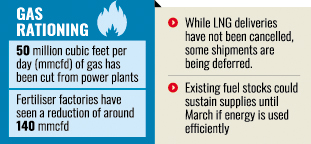
About 50 million cubic feet per day (mmcfd) of gas has been cut from power plants, while fertiliser factories have seen a reduction of around 140 mmcfd.
The only exception is the government-owned Shahjalal Fertiliser Company at Fenchganj, Sylhet, which will continue operations to support agricultural production during the country’s largest rice-cropping season, officials added.
Petrobangla Chairman Md Arfanul Hoque told reporters that the government is also facing difficulties sourcing liquefied natural gas (LNG) from the spot market due to disruptions to global supply.
He noted that while LNG deliveries have not been cancelled, some shipments are being deferred.
“Meetings with LNG operators are scheduled to assess supply conditions and cargo availability, and to inform them about the latest developments,” he said.
The fuel restrictions come amid escalating tensions in the Middle East following a US-Israel attack on Iran and Iran’s subsequent retaliation.
As a result, Iran has restricted vessels from passing through the Strait of Hormuz, a crucial maritime corridor for oil and LNG shipments.
Nearly all of Bangladesh’s crude oil and a significant share of LNG imports pass through the strait, making the country particularly vulnerable to global supply disruptions.
Separately, Power, Energy and Mineral Resources Minister Iqbal Hassan Mahmood said that existing fuel stocks could sustain supplies until March if energy is used efficiently.
Speaking at an emergency press conference at the Secretariat in Dhaka on Wednesday, he said, “Fuel supply has slowed. Without fuel, producing electricity during a crisis is extremely difficult.”
He warned that while electricity load-shedding may be necessary in the coming days, the government is working to ensure any interruptions are minimal.
“Even if there is load-shedding, it will not be unbearable. There may be some gas shortages. To overcome the crisis, everyone must be economical,” he added.
Mahmood also said the current Middle East crisis is more severe than the Russia-Ukraine war in terms of its impact on global energy markets.
“Globally, everyone is competing to secure energy. Without everyone’s cooperation, it will be difficult to overcome such a major crisis. We must use what we have efficiently,” he said.
The minister assured the public that there would be no load-shedding from iftar until taraweeh prayers and during sehri hours throughout Ramadan.
To manage the crisis, gas supplies are being rationed across sectors to prioritise electricity generation, essential industrial operations, and household use.
The temporary suspension of gas supply to most fertiliser factories, except Shahjalal Fertiliser Company, is expected to free up gas for power generation and other essential industries.
“The move is critical as a higher volume of fertiliser is needed to support cultivation of the Boro crop, which is the country’s largest rice cropping season,” a senior official said, preferring anonymity.
FUEL RESTRICTIONS, CONSERVATION
The Energy and Mineral Resources Division has also issued instructions to petrol pump operators to reduce fuel sales by 10 per cent to slow depletion of national reserves.
The measure is temporary but aims to extend existing fuel stocks in case imports remain disrupted.
Officials emphasised that domestic supply remains adequate for at least one month, but the government is taking precautionary steps to prepare for prolonged shortages.
In addition, border security has been strengthened to prevent smuggling of petroleum products, which could be sold in neighbouring countries at higher prices.
Surveillance has been increased along border areas, and Border Guard Bangladesh (BGB), district commissioners, and law enforcement agencies have been asked to monitor and prevent illegal fuel movement.
Officials said rationing of diesel sales in border regions may be introduced if smuggling attempts continue.
As part of broader conservation efforts, the government has urged citizens to use public transport instead of private vehicles and to reduce unnecessary energy consumption at homes, offices, and commercial establishments.
During Ramadan, decorative lighting has been discouraged, including in shopping malls, offices, and homes, while citizens are asked to limit vehicle use and electricity consumption.
Similar measures were also requested for Independence Day on March 26.
Officials said the government is closely monitoring international energy markets and maintaining regular contact with suppliers to ensure that fuel and gas supplies remain as uninterrupted as possible.
While LNG shipments are being deferred rather than cancelled, officials stressed the importance of careful demand management.
Further measures may be introduced if the crisis persists, including stricter rationing, additional supply arrangements, and temporary adjustments to industrial energy consumption.
The energy minister stressed that managing the crisis efficiently is now the government’s top priority.
“If everyone uses energy judiciously, the situation can be kept under control. Electricity demand is likely to ease somewhat during the Eid holidays when industrial activity slows,” he said.
The government’s emergency steps reflect the country’s growing vulnerability to global energy disruptions.
Bangladesh relies heavily on imported fuels to meet rising demand, and even temporary interruptions in the Strait of Hormuz can significantly affect electricity generation, industrial production, and fertiliser output.
Authorities emphasised that careful management of resources, energy conservation, and public cooperation are key to mitigating the impact of the Middle East crisis.
https://today.thefinancialexpress.com.bd/public/first-page/gas-rationing-begins-as-me-crisis-squeezes-supply-1772644670